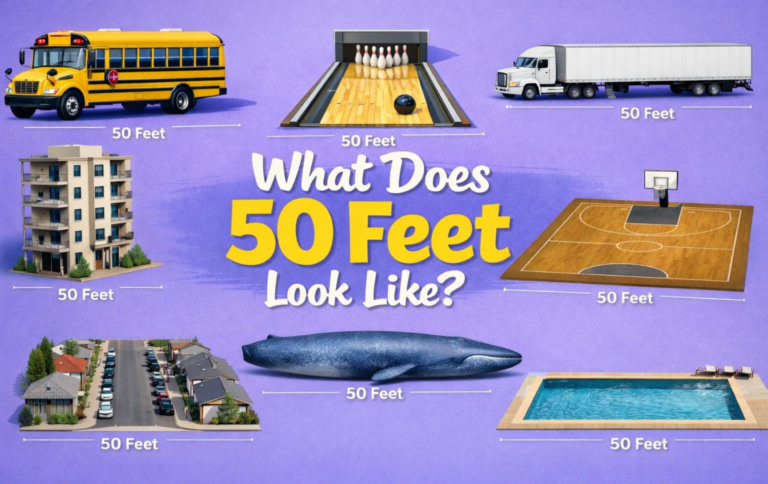
How big is 100 feet? 15 Things That Are 100 ft In Length

Measurements help us understand everyday objects. For instance, an average school bus is 40 feet long, so 2.5 buses lined up would measure 100 feet. This shows the link between numbers and real-life items. Understanding these sizes helps us see how our environment and structures connect. These examples will help you grasp the scale of measurements and visualize them better. Let’s explore how big is 100 feet?
What Measures 100 Feet in Length?
A foot is an imperial unit of measurement. To better understand 100 feet, it’s helpful to compare it to familiar objects. Many natural structures, vehicles, and animals are about this size.
| Unit | Equivalent |
| Meters | 30.48 m |
| Yards | 33.33 yards |
| Kilometers | 0.03048 km |
| Miles | 0.01894 miles |
| Inches | 1,200 inches |
| Centimeter | 3,048 cm |
| Millimeter | 30,480 mm |
What Measures 100 Feet in Length?
The real-life examples to show 100 feet are below:
| Category | Examples |
|---|---|
| Buildings and Structures | Twice the Hollywood Sign Cell Phone Tower 10-Story Building Small Suspension Bridge Span |
| Animals & Nature | A Blue Whale 20× The Heart of a Blue Whale Alligators (10 stacked) The Eastern Cottonwood Tree Large Oak Tree |
| Sports & Recreation | A Basketball Court 10 Basketball Hoops Stacked 1/3 of a Football Field 1.5 Cricket Pitches 2/3 of an Olympic Swimming Pool 1 and 1/3 of a Bowling Lane |
| Transport | Wind Turbine Blade Mega-Yacht Tender Boats Two Semi-Trailers The Boeing 737-500 Boeing 737 Aircraft (general) 10× Kayaks |
1. A 10-Story Building
Most buildings have floors that are about 10 feet high. So, a 10-story building is nearly 100 feet tall. Looking up at such a tall building shows you how high 100 feet really is. If you’ve stood next to a mid-sized apartment building, you’ve seen what 100 feet looks like.

One-Third of a Football Field
A standard American football field is 300 feet long. If you split it into three parts, each part is 100 feet. When players run that one-third distance, they are covering the same length as a 100-foot object. Using a football field for comparison makes the game feel bigger and more interesting.

Two School Buses Parked End to End
School buses represent childhood adventures and can help us understand measurements in our lives. When you see two school buses parked end to end, it invites you to think about distance. A school bus is about 40 to 45 feet long. When you line up two buses, they reach nearly 100 feet, helping you picture how far that distance is across a road or field.

A Large Oak Tree
A large oak tree can reach up to 100 feet tall, showing off nature’s majesty. These tall trees are central to many landscapes and ecosystems. Many have watched the world change around them. Mature oak trees typically stand about 80–100 feet tall and are commonly found in parks, forests, and neighborhoods, providing a great example of this height.

A Blue Whale
The blue whale is the biggest animal on Earth, reaching up to 100 feet long. That’s as long as three school buses in a row! With its sleek body, it swims smoothly in the water despite its size. These huge mammals amaze us and challenge how we see the natural world.

The Boeing 737-500
The Boeing 737-500 is a small, efficient airplane used mainly for short flights. Its size, quiet engines, and smart design make it a comfortable choice for many airlines. Built to last, it serves various operators, from budget airlines to charter services, while keeping costs low. Even though it’s an older model, it remains valuable in today’s aviation. Its legacy also supports ongoing efforts for better efficiency and conservation.

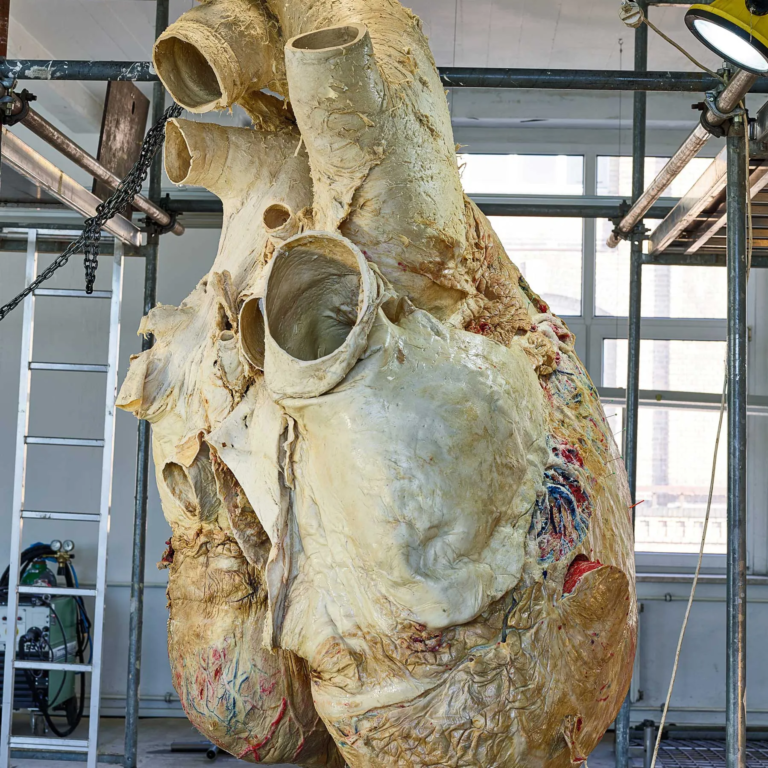
The Heart of a Blue Whale
The heart of a blue whale weighs about 400 pounds and is nearly the size of a small car. It pumps around 60 gallons of blood with each beat, supporting the whale’s 100-foot body. The heart itself is 5 feet long, so it takes 20 blue whale hearts to reach 100 feet. Scientists study this giant organ to understand how it works so well. This amazing design shows how evolution aids even the largest creatures in surviving.
8. Alligators
Alligators have lived for over 200 million years, showing their ability to adapt in swamps, rivers, and coastal marshes. If you line up 10 alligators, they stretch about 100 feet. Each alligator is around 10 feet long, creating a neat arrangement. This 100-foot display brings up questions about their habitat, behavior, and the role they play in the ecosystem. Alligators are not just fierce predators; they are smart and vital to their environments.

9. 10x Kayaks
Kayaks are small boats that people paddle using a double-bladed paddle. Each kayak is made for one person and measures 10 feet long. When ten kayaks line up side by side, they cover 100 feet, showing the scale of the open water experience. This length helps paddlers appreciate the diversity of their surroundings, turning numbers into meaningful connections with nature.

The Eastern Cottonwood Tree
The Eastern Cottonwood is vital to the ecosystem. It can grow up to 100 feet tall and provides homes for birds, insects, and other wildlife. Its fast growth and height can turn an ordinary backyard into a lively space for animals. This tree stabilizes soil, manages water, and prevents erosion, which is essential for a healthy ecosystem. As a symbol of strength, the Eastern Cottonwood demonstrates nature’s ability to adapt and survive.

A Small Rope Bridge or Zipline
Many small rope bridges and ziplines in adventure parks are about 80–120 feet long, with 100 feet being common for crossing rivers or gaps. From one end, you can easily see this distance. The 100-foot drop gives you a great view of nature’s beauty while adding excitement and fun. Both experiences push you out of your comfort zone and help you reconnect with nature. Ziplines especially show you just how far 100 feet can feel.

12. A Hockey Rink Width
A hockey rink is 100 feet wide, which is crucial for the game. This space allows players to be creative and work together, showcasing their skills. Unlike other sports, the wide rink encourages players to use every part of the ice, making the game more exciting. The 100-foot width also improves the fan experience, offering better views and thrilling moments. The rink’s size not only defines its layout but also captures the spirit of hockey as an exciting sport.

13. A Basketball Court
A standard basketball court measures 94 feet by 50 feet, but its importance goes beyond size. The court’s 100-foot length fuels the energy of players as they run, dribble, and shoot. It enhances the fan experience too, allowing for a better view. Fans cheer loudly, creating an exciting atmosphere. This 100-foot space is a stage for rivalries, showcasing the strong emotions between players and the game.

14. 10 Basketball Hoop
The perfect height for a basketball hoop is 10 feet. This height is not random; it’s a standard that challenges players. If you stacked ten hoops, they would reach 100 feet! This idea shows how players strive for the perfect shot and emphasizes the skill and strategy in basketball.

Twice The Hollywood Sign
The Hollywood Sign sits on the hills of Los Angeles and represents the glamour of the film industry. It attracts dreamers from all over the world. Many don’t know that it originally read “Hollywoodland” before being changed in 1923.
The sign shows how Hollywood has grown from a single place to a global cultural icon. Standing 49 feet tall, it inspires many in the film industry. When you double its height, it reaches 100 feet, highlighting the complexities of Hollywood and the dreams it embodies.

How Long is 100 Feet to Walk?
Walking 100 feet can seem tough, but it’s simpler than it looks. If you walk at an average speed of 3 miles per hour (about 4.4 feet per second), you’ll walk that distance in 23 seconds. Here’s a quick list of speed and time:
| Walking Speed | Feet per Second | Time to Walk 100 ft | Time (Readable) |
| 2 mph (slow walk) | 2.9 ft/s | ~34 seconds | ~0 min 34 sec |
| 3 mph (average walk) | 4.4 ft/s | ~23 seconds | ~0 min 23 sec |
| 3.5 mph (brisk walk) | 5.1 ft/s | ~20 seconds | ~0 min 20 sec |
| 4 mph (fast walk) | 5.9 ft/s | ~17 seconds | ~0 min 17 sec |
| 5 mph (very fast walk) | 7.3 ft/s | ~14 seconds | ~0 min 14 sec |
Why to use the Foot?
Using the foot as a measurement has historical value and practical benefits. It comes from ancient times and is based on the average size of a person’s foot.
The foot is useful in many areas, especially construction and sports. Builders use feet to create designs that match human size, making them more comfortable. Athletes also gain from using feet to measure performance, helping them understand their achievements better. Read How Long is 8 Inches?
FAQs
Q1. How long is 100 feet in a bedroom?
A: A standard bedroom is about 10×10 feet, so 100 feet is much larger than that.
Q2. How many cars equal 100 feet?
A: If an average car is 15 feet long, you can fit about 7 cars in a row to make 100 feet.
Q3. How many meters is 100 feet?
A: 100 feet equals 30.48 meters.
Q4. Is 100 feet far in kilometers?
A: No, 100 feet is not far. It is just 0.03 kilometers (30 meters).
Q5. How far is 100 feet on a football field?
A: 100 feet is one-third of a football field, which is 300 feet long.
Conclusion
One hundred feet may seem small, but it’s a big measurement when you compare it to buildings, vehicles, trees, and fields. The examples above show just how tall, long, and wide 100 feet can be. Whether you need to picture it for construction, travel, or just out of curiosity, these comparisons make it easy to see. Now, when someone says 100 feet, you’ll know exactly how far that is.