How Big Is 2mm? Actual Size, Conversions and Comparisons
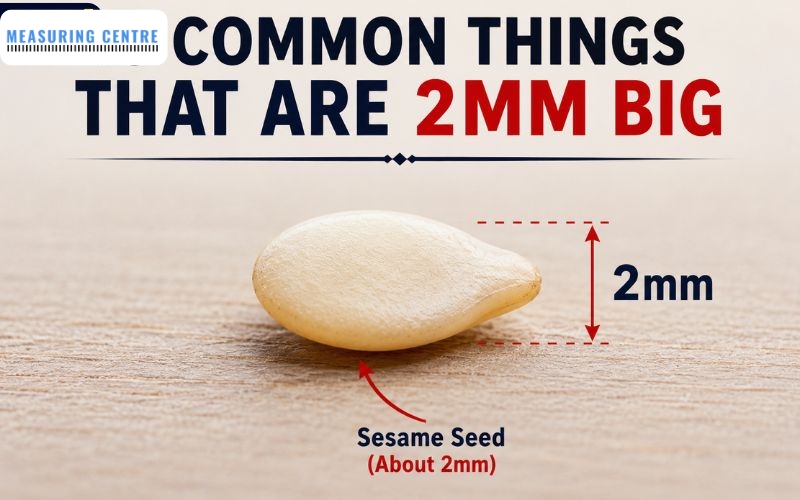
Two millimeters is a very small length equal to 0.2 centimeters, 0.07874 inches, or about 5/64 inch. It is almost the same as the 1.95mm thickness of a U.S. nickel. On a metric ruler, 2mm spans two of the smallest one-millimeter divisions.
It is easy to read “2mm” in a product description and still have no clear picture of its actual size. The measurement might describe a gemstone’s diameter, a sheet of craft foam, a gap between components, a pencil lead, a wire, or the shaft of a small screw.
This guide explains how big 2mm is in both metric and imperial units. It also provides verified comparisons, practical measuring instructions, common applications, and warnings about comparisons that are only approximate.
Key Takeaways
- ✅ 2mm equals 0.2cm or 0.07874 inches
- ✅ It is approximately 5/64 inch
- ✅ A U.S. nickel is 1.95mm thick, making its edge an excellent visual reference
- ✅ A standard identification card is about 0.76mm thick, so 2mm equals roughly 2.6 cards
- ✅ Two millimeters is visible without magnification but difficult to estimate precisely
- ✅ A metric ruler or digital caliper gives the most reliable measurement
How Big Is 2mm in Inches, Centimeters and Other Units?
The inch is defined as exactly 25.4 millimeters. Dividing 2 by 25.4 gives approximately 0.07874 inches.
| Unit | Equivalent to 2mm |
| Millimeters | 2mm |
| Centimeters | 0.2cm |
| Meters | 0.002m |
| Micrometers | 2,000µm |
| Inches | 0.07874in |
| Approximate fraction | 5/64in |
| Feet | 0.00656ft |
Although 5/64 inch is a useful fractional comparison, it is not an exact replacement. Five sixty-fourths of an inch equals about 1.984mm, which is 0.016mm less than 2mm.
For ordinary visual comparisons, that difference is negligible. For machining, engineering, jewelry settings, or tightly fitted components, use the decimal measurement or measure directly in millimeters.

What Does 2mm Look Like in Real Life?
The most reliable everyday comparison is the edge of a U.S. nickel.
The U.S. Mint lists the nickel’s thickness as 1.95mm, only 0.05mm less than 2mm. Its edge therefore provides a close physical reference rather than a vague visual estimate.
Real-World 2mm Comparison Table
| Object or Reference | Relevant Measurement | Exactness | What It Shows |
| U.S. nickel edge | 1.95mm thick | Very close | A practical pocket reference |
| Two metric ruler divisions | 2mm | Exact when printed correctly | The actual linear distance |
| 2mm mechanical pencil lead | 2mm diameter | Nominal | A visible cylindrical diameter |
| M2 screw shaft | 2mm nominal diameter | Nominal | A common hardware reference |
| 2mm jewelry bead | 2mm diameter | Nominal | How a tiny round object appears |
| 2mm drill bit | 2mm diameter | Nominal | A precise workshop comparison |
| 2mm craft foam | 2mm thick | Nominal | A flat material thickness |
| 2mm tile spacer | 2mm gap | Nominal | A spacing reference |
| Small mustard seed | Often near 1–2mm | Approximate | A natural comparison |
| Coarse salt crystal | Often near 2mm | Approximate | An irregular household reference |
| Fine electronic wire | May be near 2mm | Approximate | A flexible diameter comparison |
| Small gemstone | 2mm diameter | Nominal | A jewelry-scale visual reference |
Natural objects should not be treated as calibrated measuring tools. Seeds, insects, salt crystals, and grains vary by species, variety, processing, moisture, and individual specimen.
How Big Is 2mm Compared with a Credit Card?
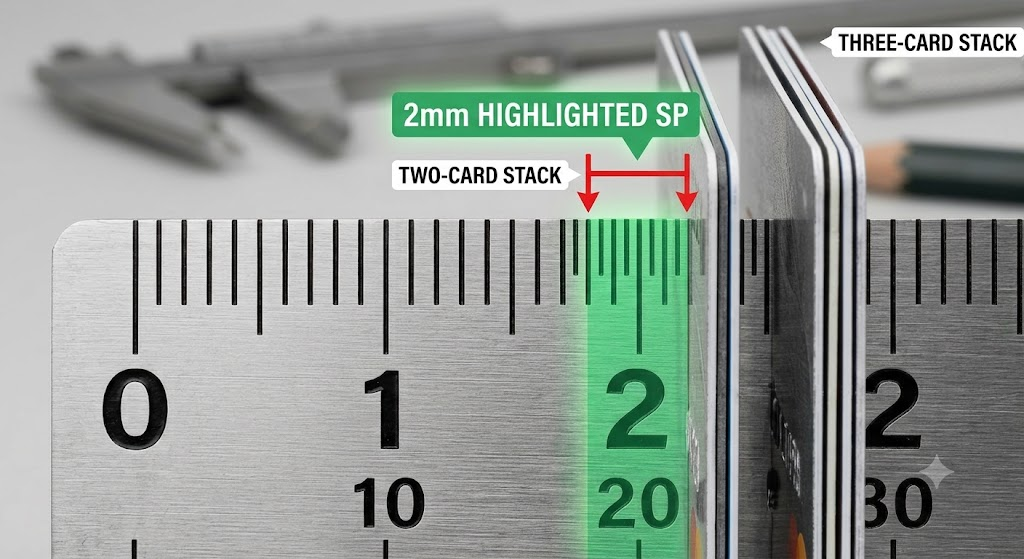
A standard identification or payment card is commonly described using the ISO/IEC 7810 card standard. The earlier published specification states a nominal thickness of 0.76mm, while the current ISO/IEC 7810:2019 standard covers the physical characteristics and dimensions of identification cards.
That means:
- One standard card is approximately 0.76mm thick
- Two cards are approximately 1.52mm thick
- Three cards are approximately 2.28mm thick
- A 2mm thickness equals roughly 2.63 standard cards
Therefore, the common claim that 2mm equals exactly two stacked credit cards is inaccurate. Two cards can still provide a rough mental reference, but they fall about 0.48mm short of 2mm based on the nominal specification.
Card thickness can also vary because of embossing, protective layers, wear, manufacturing tolerances, and card type. Do not use stacked cards when precision matters.
Is 2mm Easy to See?
Yes, a 2mm object or gap is visible to the unaided eye under normal lighting.
However, being able to see 2mm is different from estimating it accurately. Most people can recognize that a bead, screw, gap, or wire is small, but they cannot reliably distinguish 2mm from 1.5mm or 2.5mm without a reference.
The difference becomes more noticeable when:
- Several 2mm gaps appear in a row
- A part must fit inside another part
- A design uses a 2mm border or bleed
- Multiple 2mm layers are stacked
- A gemstone is compared directly with larger stones
- A screw must match a threaded opening
A 0.5mm difference may appear minor in a photograph but can change whether a component fits, whether a ring setting holds a stone, or whether printed details remain legible.
How Big Is a 2mm Gemstone?
A 2mm gemstone measures 2mm across its widest point when the listing refers to diameter.
It will look like a very small bright dot when viewed by itself. Jewelers often use stones around this size as accent stones, in pavé arrangements, in clusters, or along bands rather than as large central stones.
The visual impact depends on more than diameter. It also changes with:
- Cut and facet pattern
- Stone color
- Reflectivity
- Setting style
- Metal color
- Distance between stones
- Number of stones used together
A round 2mm stone and a square 2mm stone share a similar maximum width but do not cover exactly the same visible area. Depth may also differ even when the face-up width is the same.
When ordering jewelry components, verify whether “2mm” refers to the stone diameter, hole diameter, bead diameter, setting size, wire thickness, or total product width.
How Big Is 2mm on a Ruler?
On a metric ruler, each centimeter is divided into ten millimeters.
To locate 2mm:
- Find a numbered centimeter line.
- Identify the smallest divisions beside it.
- Count two one-millimeter spaces.
- The distance from the starting line to the second millimeter line is 2mm.
Do not simply count two printed lines without checking the spaces between them. Starting at zero and moving to the second millimeter mark gives a 2mm distance.
An imperial ruler can be less convenient. Two millimeters is approximately 0.07874 inch, lying very close to 5/64 inch. A ruler marked only in eighths or sixteenths cannot show 2mm exactly.
For accurate work, use:
- A metric ruler for basic measurements
- A digital caliper for outside or inside dimensions
- A feeler gauge for narrow gaps
- A micrometer for highly precise thickness measurements
- A 2mm drill bit or gauge pin as a physical diameter reference
How to Measure 2mm Accurately
Measuring a Length or Width
Place the zero mark of a metric ruler at one edge of the object. Read the scale at the opposite edge while looking straight down to avoid parallax error.
Parallax occurs when the scale is viewed from an angle, making the edge appear aligned with the wrong mark.
Measuring Thickness
For rigid objects, use digital calipers. Close the jaws gently around the object and avoid squeezing soft materials such as foam, leather, rubber, or fabric.
Compression can produce a reading smaller than the material’s normal thickness.
Measuring Diameter
Measure straight across the widest part of a round object and pass through its center.
Do not confuse:
- Radius: Distance from the center to the edge
- Diameter: Full distance across the center
- Circumference: Distance around the outside
A circle with a 2mm diameter has:
- Radius: 1mm
- Circumference: approximately 6.28mm
- Cross-sectional area: approximately 3.14mm²
Measuring a 2mm Gap
A ruler may not fit inside a narrow opening. Use a 2mm feeler gauge, gauge pin, tile spacer, drill shank, or another calibrated reference instead.
Do not force a tool into a delicate gap. It may scratch the surface, bend the component, or enlarge the opening.
Checking a Screen Image
Never assume an online image displays at actual size. Screen dimensions vary according to:
- Monitor size
- Pixel density
- Browser zoom
- Operating-system scaling
- Image resizing
- Mobile display settings
A digital 2mm line becomes physically accurate only after calibration against a ruler or when a correctly prepared diagram is printed at 100% scale.
Common Uses for a 2mm Measurement
Jewelry and Beadwork

Two millimeters may describe beads, gemstones, cord, wire, chains, drill holes, or spacing. Small differences affect how components fit together and how delicate the finished piece appears.
Electronics
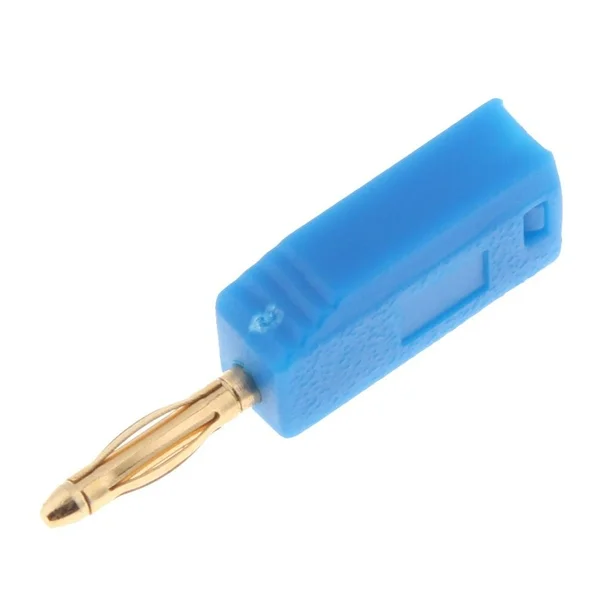
Small screws, wires, connectors, insulating layers, circuit-board clearances, and device gaps may be specified in millimeters. A 2mm mismatch can prevent a housing from closing or a connector from aligning.
Hardware and Engineering

An M2 fastener has a nominal thread diameter of 2mm. However, “M2” does not tell you the screw length, head type, thread pitch, material, or tolerance.
Confirm the complete specification before purchasing replacement hardware.
3D Printing
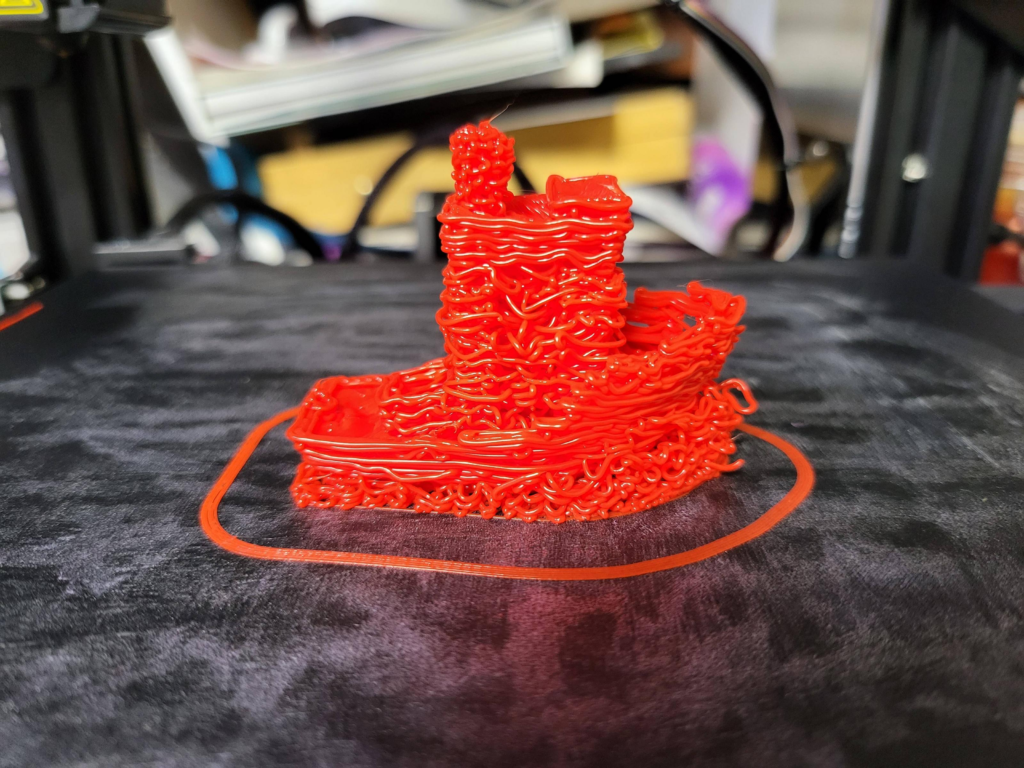
A designer may use 2mm for walls, holes, clearances, slots, raised lettering, or supports.
A nominal 2mm feature may print differently depending on nozzle diameter, resin exposure, printer calibration, material shrinkage, layer height, and part orientation.
Graphic and Packaging Design

Two millimeters can describe borders, margins, corner radii, line spacing, or cutting allowances.
Remember that millimeters are physical units, while pixels depend on resolution. At 300 pixels per inch, 2mm equals approximately 23.6 pixels. At 96 pixels per inch, it equals about 7.56 pixels.
Furniture and Interior Work
A 2mm gap can affect drawer alignment, cabinet reveals, floor expansion spaces, veneer thickness, edge banding, and tile spacing.
Across several panels, repeated 2mm differences can become visually obvious.
Sports Equipment

Two millimeters may describe grip thickness, tread depth, protective layers, string diameter, adjustment spacing, or manufacturing tolerance.
Always check whether the specification refers to thickness, diameter, depth, movement, or allowable variation.
How Does 2mm Compare with Other Small Measurements?
| Measurement | Centimeters | Inches | Relative to 2mm |
| 0.5mm | 0.05cm | 0.01969in | One-quarter as large |
| 1mm | 0.1cm | 0.03937in | Half as large |
| 1.5mm | 0.15cm | 0.05906in | Three-quarters as large |
| 2mm | 0.2cm | 0.07874in | Reference size |
| 2.5mm | 0.25cm | 0.09843in | 25% larger |
| 3mm | 0.3cm | 0.11811in | 50% larger |
| 5mm | 0.5cm | 0.19685in | 2.5 times as large |
| 10mm | 1cm | 0.39370in | Five times as large |
Two millimeters is:
- Twice as large as 1mm
- One-fifth of 1cm
- One-fiftieth of 10cm
- One-five-hundredth of 1 meter
- Slightly larger than a U.S. nickel’s 1.95mm thickness
For another visual reference, explore How Big Is 5mm?, which should link to your 1mm measurement guide.
Common Mistakes When Visualizing 2mm
Treating Every Comparison as Exact
Coins produced to official specifications provide strong references, but seeds, grains, wires, insects, foam sheets, and handmade objects vary.
Label those examples as approximate.
Confusing Diameter with Length
A bead may be 2mm in diameter but have a differently sized hole. A screw may have a 2mm shaft diameter while its head is much wider.
Identify the exact part being measured.
Confusing 2mm with 2cm
Two centimeters equals 20mm, making it ten times larger than 2mm.
This is one of the most important decimal-place errors to avoid.
Assuming 2mm Equals One-Tenth Inch
One-tenth inch equals 2.54mm. That is 0.54mm, or 27%, larger than 2mm.
For casual visualization, both are small. For precise fitting, the difference is significant.
Measuring from the Edge of a Ruler
A ruler’s physical edge may not align perfectly with its zero mark. Begin at the printed zero line or use another clear numbered mark and subtract the readings.
Trusting an Uncalibrated Screen
A line labeled “2mm” can appear much larger or smaller on different devices. Verify it against a physical ruler.
Does 2mm Vary Between the US and UK?
A millimeter has the same defined length worldwide. Two millimeters in the United States is physically identical to two millimeters in the United Kingdom, Europe, Asia, or elsewhere.
What changes is how often each measurement system is used.
The UK commonly uses metric measurements for many technical and consumer purposes but still uses imperial units in selected contexts. The United States frequently uses inches, although metric units remain standard in science, medicine, electronics, manufacturing, and many internationally produced goods.
When communicating 2mm to mixed audiences, provide both:
- 2mm or 0.2cm
- 0.07874 inch
- Approximately 5/64 inch
The international inch-to-millimeter relationship is fixed: one inch equals exactly 25.4mm.
Why a 2mm Difference Can Matter
Two millimeters feels tiny when viewed by itself, but its importance depends on context.
In furniture, repeated 2mm gaps can make doors or drawers look uneven. In electronics, a 2mm interference can prevent assembly. In jewelry, moving from a 2mm stone to a 4mm stone doubles the diameter and greatly increases the visible face area.
In printing, 2mm can determine whether text sits safely inside a cut line. In 3D printing, a 2mm wall may be strong in one material but fragile in another.
This is why technical drawings specify not only a nominal dimension but often an acceptable tolerance. A dimension written as 2.00mm ±0.05mm communicates far more than “about 2mm.”
Conclusion
Two millimeters equals 0.2cm, 0.07874 inch, or approximately 5/64 inch. The edge of a U.S. nickel, officially listed as 1.95mm thick, is one of the closest familiar comparisons.
Use everyday objects only for rough visualization. For jewelry, electronics, printing, hardware, furniture, or design work, measure with a metric ruler or digital caliper. Bookmark this guide for future reference and explore the related measurement resources for additional size comparisons.
Frequently Asked Questions
How big is 2mm in inches?
Two millimeters equals approximately 0.07874 inches. It is slightly larger than 1/16 inch and very close to 5/64 inch. The conversion is based on the exact definition of one inch as 25.4mm.
What everyday object is about 2mm thick?
A U.S. nickel is 1.95mm thick, making its edge one of the closest familiar references for a 2mm thickness.
How can I measure 2mm on a ruler?
Use a metric ruler and count two of the smallest one-millimeter spaces from the zero line. For greater accuracy, measure the object with digital calipers.
Is 2mm smaller than one-eighth of an inch?
Yes. One-eighth inch equals 3.175mm, so it is approximately 1.175mm larger than 2mm.
How big does a 2mm gemstone look?
A 2mm gemstone looks like a tiny bright dot and is commonly suited to accent work, clusters, or delicate settings. Confirm whether the listed measurement refers to diameter, width, depth, or hole size.
Related Post: How Long Is 25 Feet Length? 15 Real-World Comparisons